

BOOKS & ARTICLES
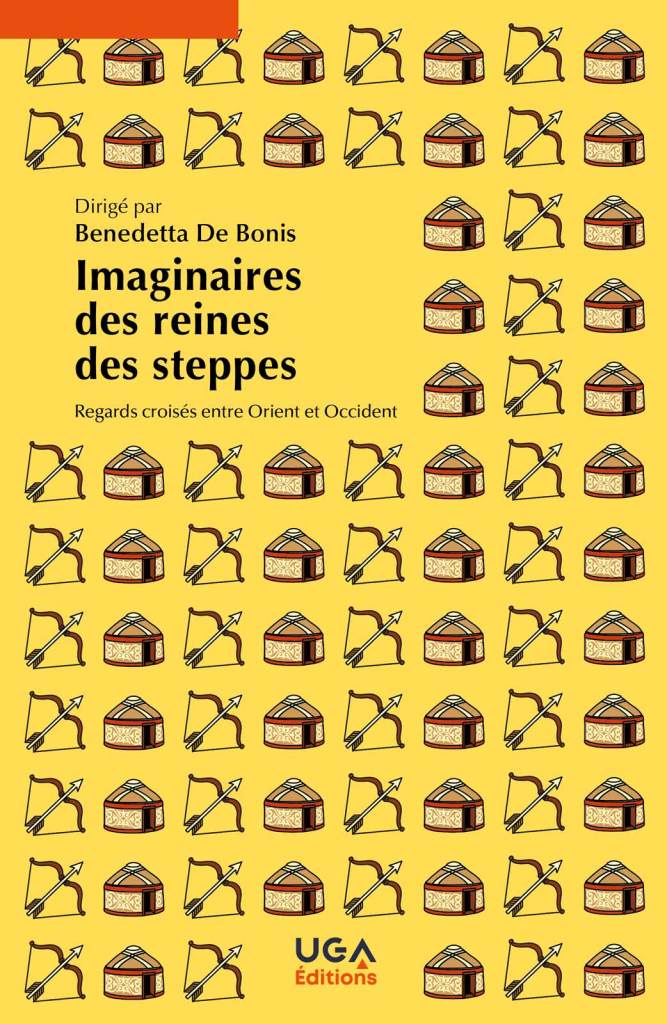
We are pleased to announce that the proceedings of the conference Imaginaries of the Steppe Queens in History, Literature, and the Arts. Crossed Views between East and West, organized by Benedetta De Bonis within project WISE, have been published by UGA Université Grenoble Alpes Éditions in the “Vers l’Orient” series !
Benedetta De Bonis (dir.), Imaginaires des reines des steppes. Regards croisés entre Orient et Occident, Grenoble, UGA Éditions, “Vers l’Orient” series, 2026.
Benedetta De Bonis, “Post-orientalismo e globalizzazione. Studio sugli adattamenti del Milione tra cinema e letteratura”, in F. Amigoni, S. Baroni, F. Bertoni, G. D’Amato, L. Diani, G. M. Gallerani, D. Meneghelli, V. Pietrantonio, B. Seligardi (ed.), Dov’è la letteratura? Circolazione, istituzioni, rapporti di forza, Milano, Ledizioni, 2025, p. 199-209
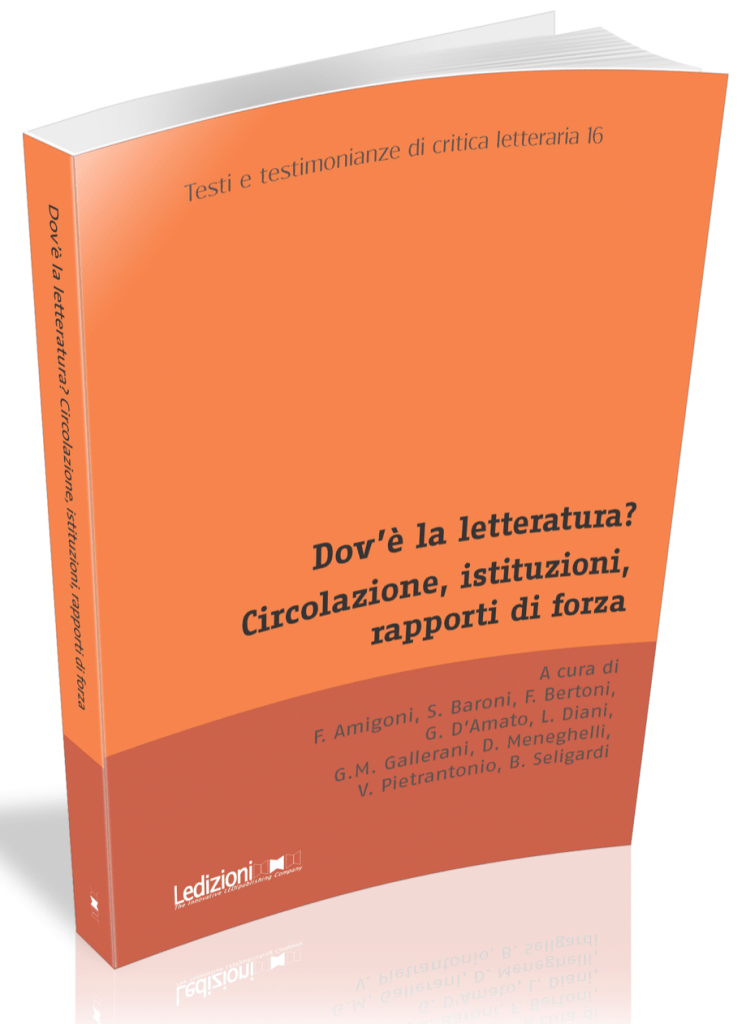
According to Edward Said, the East is a mental horizon onto which the West projects its fears and desires, a ‘discourse’ shaped by academic knowledge, institutions, and artistic imaginary. Within this framework, until the beginning of the 20th century, the name of Genghis Khan’s descendants was associated in the West with barbarism and the Apocalypse. One of the few exceptions to this negative view is the Travels, written by the Venetian merchant Marco Polo after his return from the Mongol court of Kublai Khan in China. Over the centuries, this work has continually stimulated the imagination of writers and filmmakers, partly due to its extraordinary cultural mediation. This article analyses three film adaptations of the Travels that illustrate the evolving relationship between East and West in contemporary times. This process also involves rethinking interactions between local and global, centre and periphery, identity and otherness in a post-Orientalist and postcolonial context. The first is the French production La fabuleuse aventure de Marco Polo (1965), directed by Denys de La Patellière and Noël Howard, with a screenplay by Jacques Rémy, who also authored the novel of the same title. The film portrays a Westernized Orient, where exotic clichés confusedly converge. The second is the TV series Marco Polo (1982) by Italian director Giuliano Montaldo. Scottish screenwriter David Butler and Italian writer Maria Bellonci, both authors of their own novels about the Venetian traveller, collaborated on the project. This series marks the first collaboration between a Western TV station and China. Finally, in the Netflix series Marco Polo (2014-16), American John Fusco makes extensive use of Mongolian studies. He blends orientalist topoi, which are popular with mass audiences, with a thorough reconstruction of the historical context. This comes at a time when post-Soviet Mongolia is emerging on the global geopolitical chessboard, as a potential ally for the United States, which aspire to play a pivotal role in Eurasia.
You can find the article below
and the book at https://www.ledizioni.it/prodotto/dove-la-letteratura-circolazione-istituzioni-rapporti-di-forza/
Benedetta De Bonis, “Les architectures brisées de Jean-Luc Lagarce. Turandot, d’après Carlo Gozzi et Giacomo Puccini”, Griseldaonline, 23 / 1, 2024

Jean-Luc Lagarce (Héricourt 1957, Paris 1995) started out as a playwright with the Théâtre de la Roulotte in Besançon, working both on the writing of his own pièces and the adaptation of classics. In 1981, at the time of his theatre company’s transition to professional activity, he directed Turandot, based on the works by Carlo Gozzi and Giacomo Puccini. Usually described as an ‘adaptation’, this text is actually a more complex work. Its composition also involved inter- and intra-linguistic translation and rewriting. This paper analyses: 1) the translation carried out by Lagarce with the help of Mireille Herbstmeyer; 2) the idea of variation on the classics underlying the contemporary version; 3) the author’s resumption and resemantisation of elements contained in the hypotexts. The aim is to understand how Lagarce’s contemporary sensibility has shed new light on the story of Turandot.
You can find the article below
or at https://griseldaonline.unibo.it/article/view/19362
Benedetta De Bonis, “Chinggis Khan, Women, and the West: Literary and Cinematic Remakes of the Secret History of the Mongols, Humanities 13 / 4, 96, 2024.

The name of Chinggis Khan and the women who contributed to the rise of his empire have long been associated with barbarism in the West. However, the rediscovery of the Secret History of the Mongols, a medieval Mongolian epic chronicle, in 1866, and its numerous translations circulating since the mid-20th century has led Western scholars to a total revaluation of these figures. This paper analyses the representation of Chinggis Khan and his queens in the literary and cinematic adaptations of the Secret History of the Mongols produced in Europe and the United States, specifically in English, French, and Italian. It critically engages with E. W. Said’s works, and with postcolonial and gender studies. The article argues that the portrayal of the Mongols has become increasingly positive in 20th and 21st century remakes of the epic chronicle, highlighting how the West reconsiders its relationship with cultural and gender otherness in an era marked by decolonisation and feminist claims.
You can find the article below
or at https://www.mdpi.com/2076-0787/13/4/96
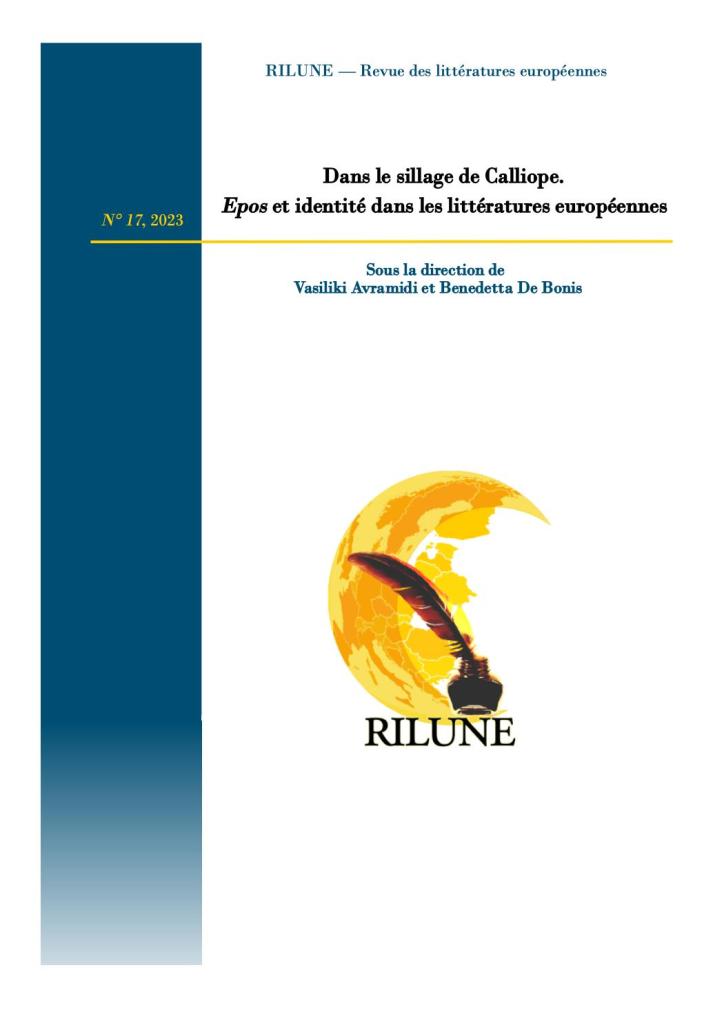
RILUNE — Revue des littératures européennes, 17, 2023,
Dans le sillage de Calliope. Epos et identité dans les littératures européennes,
edited by Vasiliki Avramidi and Benedetta De Bonis
Myth is the telling of a sacred story which took place in the primordial time of beginnings. The first and noblest guise it has assumed over the centuries has been that of the epic. By recounting the deeds of gods and heroes, this literary genre has had a significant impact on the construction process of peoples’ identities. In fact, it has enabled Europe to define its own axiology, to conduct both linguistic and political debates, and even to explore issues relating to cultural and gender otherness. This monographic journal issue examines the relationship between epic and identity in European literatures. It includes contributions questioning the relationship between tradition and innovation in the construction of new epics ; the process of circulation of major epics through exegesis and translations ; and the rewriting of epic poems and their adaptation to other literary genres.
You can find the full version of the journal issue below
or at www.rilune.org
 Western images of the steppe empresses