

WISE
Since the Middle Ages, the name of Genghis Khan has been associated in the West with the idea of the Apocalypse. In accordance with this negative representation, the women who contributed to the rise of his empire have long been described as sinister witches and warriors, indistinguishable from the men of their horde. However, studies carried out starting in the last century, thanks to the opening of Mongolia to the West and the rediscovery of new local sources, have led Western scholars to a profound revaluation of Genghis Khan, now seen as one of the makers of the modern world. This revaluation has also affected our view of Mongol princesses, who enjoyed a freedom and a consideration unknown to their sedentary neighbors. Wise and resilient, they took part like men in war, politics and trade, and could choose whether and with whom to marry.
Western Images of the Steppe Empresses (WISE) is a comparative literature research aiming to understand whether the new anthropological, archaeological, historical and philological studies carried out by the Mongolists have triggered a change in the perception of Genghisid female royalty in 20th and 21st century Western culture. It analyses their representation in American and Anglophone, Francophone and Italophone European literature and cinema. WISE seeks to understand the cultural reasons for the metamorphosis of the image in question, and whether it is connected to the changed role of women in the West as a result of feminist claims. Moreover, it explores the possibility of an Oriental influence, linked to the steppe culture, on the model of emancipated and combative women prevalent in the West today.
The project has received funding from the European Union under the Marie Skłodowska-Curie Actions (Grant Agreement No 101061720). It was hosted in 2022-2024 by the research units THALIM Théorie et Histoire des Arts et des Littératures de la Modernité (CNRS-Paris 3-ENS) and GSRL Groupe Sociétés Religions Laïcités (CNRS-EPHE-PSL) at the Sorbonne Nouvelle University and the École Pratique des Hautes Études.
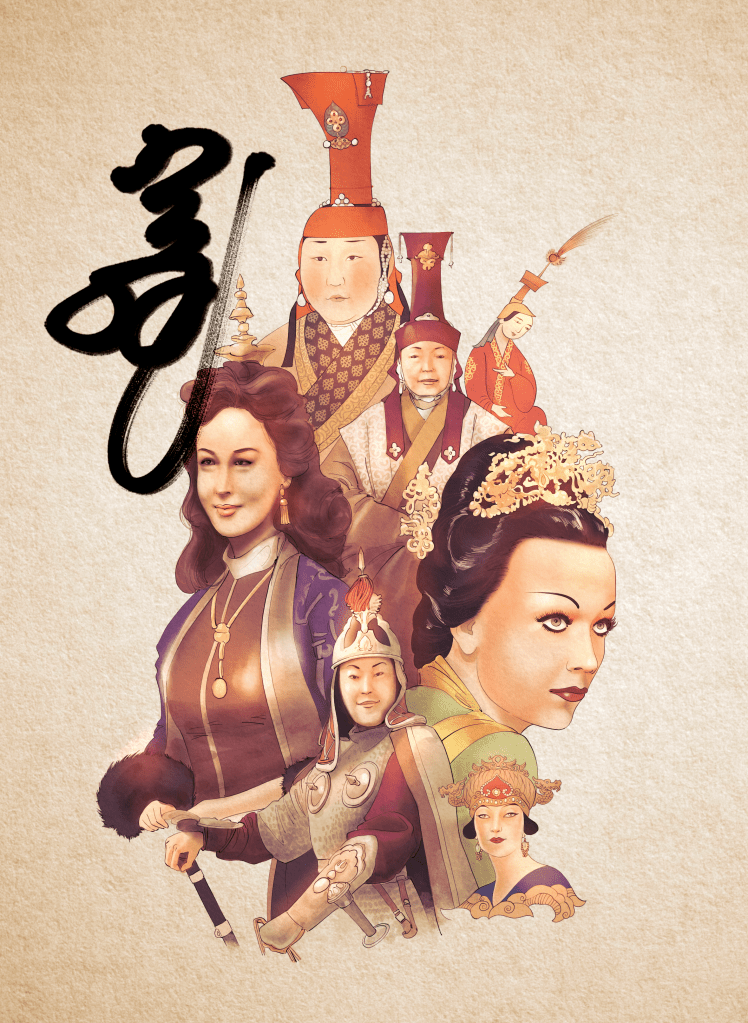
© Illustration: Amgalan Sukhbaatar for project WISE.
 Western images of the steppe empresses